


News
Supreme Court judges about children’s rights, corruption, unlawful enrichment, bankruptcy of natural persons, business development and other realities

In his overview of results related with the hearing of cases in 2014, President of the Supreme Court of Lithuania Rimvydas Norkus emphasised that cassation cases reflect the pulse of the times in the State: there prevailed disputes related with the protection of children’s rights, relations between banks and their clients, issues of bankruptcy of both enterprises and natural persons, the complicated offences related with finances and corruption resolved. In the presented Annual Report of the Court, the most important and relevant court practice of the previous year is reviewed by its judges.
According to President Norkus, the Supreme Court of Lithuania (SCL), that had one third of its personnel renewed in 2014, heard a whole range of complicated and socially sensitive cases. Their indicators remained stable. ‘Judgements in 49 percent of the civil cases and in 29 percent of the criminal cases heard were amended and overturned. The average length of procedure, as compared with the courts of cassation in other ES Member States, gives cause for optimism’, noted the President.
The 2014 Annual Report of the Supreme Court of Lithuania includes surveys of the Court practice in essential areas prepared by its judges. In the section dealing with family law, the priority of the best interests of the child is emphasised; therefore, inappropriate behaviour of one of the parents in avoiding to ensure communication of a child with the separately residing parent may constitute grounds for changing the place of the child’s residence. Taking in regard the fundamental character of the protection of personal property, it is noted that a necessary condition for a lawful appropriation of property from its owner is not only the interests of society but also a fair remuneration. Within the context of contractual relations, judges emphasised cooperation of parties and disclosure of relevant information as an expression of good faith in pre-contractual and contractual relations.
Development of business is hardly imaginable without creative decisions of heads of companies. The Court highlighted that excessive application of civil liability to directors of legal persons may hamper the development of the whole business. Bearing in mind the still scanty practice of related with natural persons’ bankruptcy, it is reminded that this is first of all a legal measure for changing a person’s behaviour and restoring their solvency rather than an easy way of ‘writing off’ debts.
The judges’ comments also include the most significant insights into the practice of criminal cases. Within the context of the dangerous to the State corruption offences, the toughening of liability introduced by the legislator is highlighted. There also is a comprehensive comment about human trafficking – a contemporary form of slavery – which is being fought against at the international level. According to the SCL, in determining cases of human trafficking, it is especially important to prove the fact of such transaction vis a vis a person with the aim of submitting them to unlawful exploitation. In addition, the section on the practice of criminal cases is supplemented with such issues as public significance of criminal offences, application of criminal liability for fraudulent misappropriation and embezzlement.
These interpretations presented by the Supreme Court of Lithuania are expected to offer both a reliable guideline to those interested in the practice of a court of cassation and a stimulus to get a deeper insight into this practice.
The Supreme Court of Lithuania is the only court of cassation for reviewing effective judgments of courts of general jurisdiction. A fundamental designation of a court of cassation is to ensure a uniform practice of general competence courts in a State. Only the most complicated and significant cases are subject to review by the Supreme Court of Lithuania.
The 2014 Annual Report of the Supreme Court of Lithuania is available at: http://www.lat.lt/lt/naujienos/metiniai-pranesimai.html. Please indicate the source of information when citing or otherwise making use of this information.
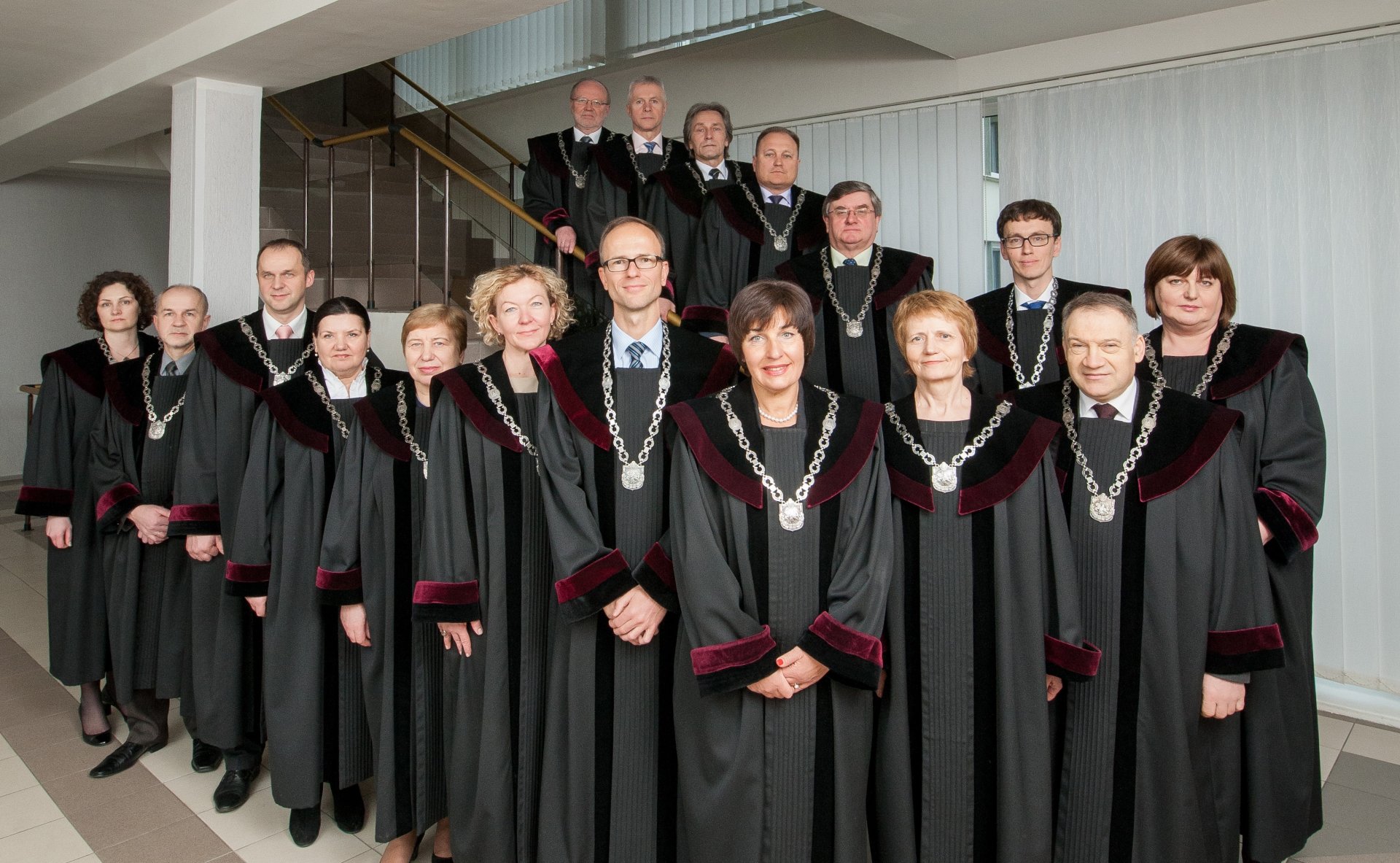
Civil Division of the Supreme Court
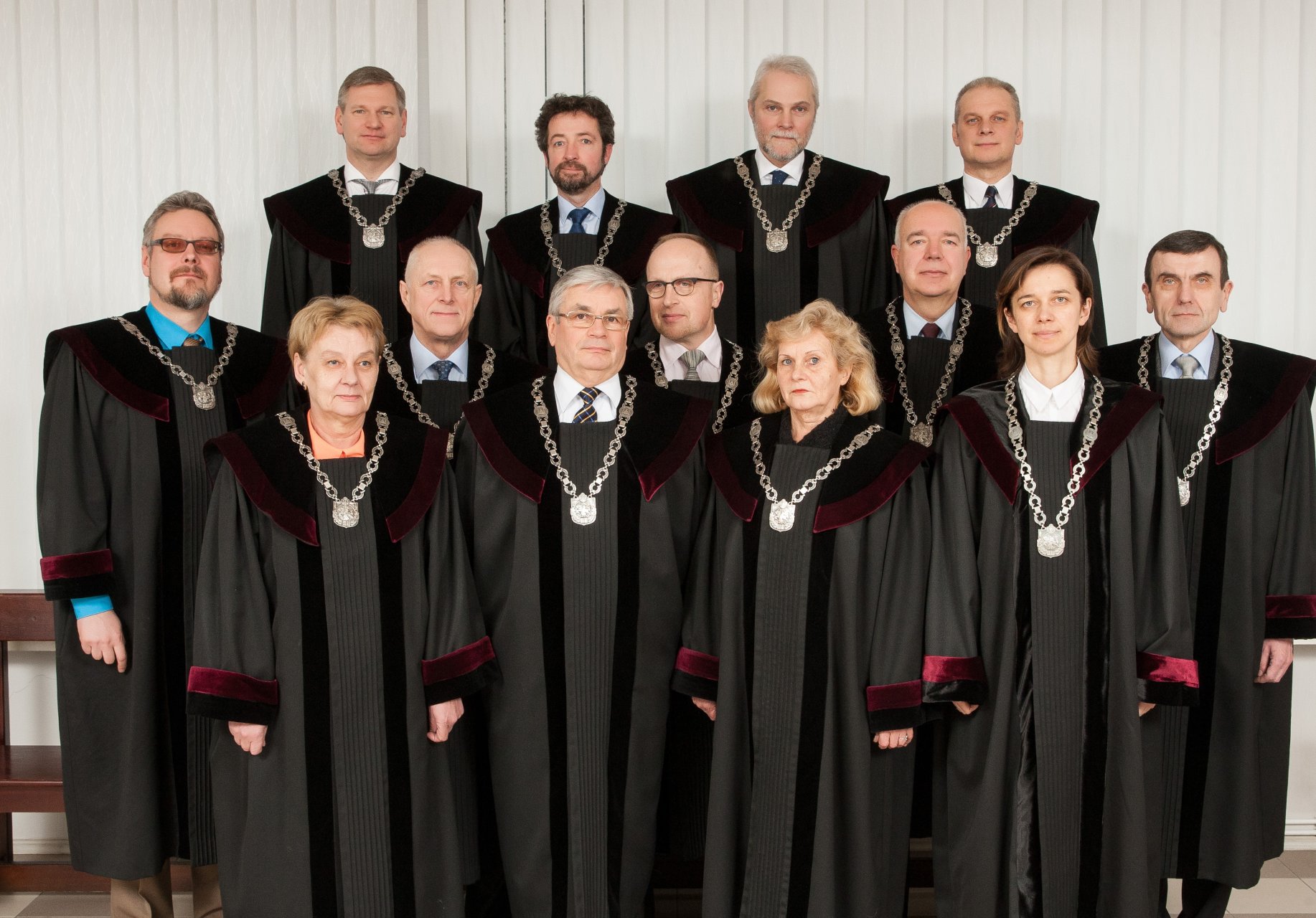
Criminal Division of the Supreme Court


Contacts
The Supreme Court of Lithuania
Gynėjų 6, 01109 Vilnius
Telephone +370 5 2 616 466
Email [email protected]
Code 188602032
E. pristatymas (Electronic delivery system) details:
name – Lietuvos Aukščiausiasis Teismas
address – 188602032
Budgetary institution
Data is collected and stored in the Register of Legal Entities,
Code 188602032
Working hours
I-IV 8.00 – 17.00
V 8.00 – 15.45
Lunch break
12.00 – 12.45
Documents can also be submitted during the lunch break

Website Compliance Application (in Lithuanian)
Publications

Map of courts

